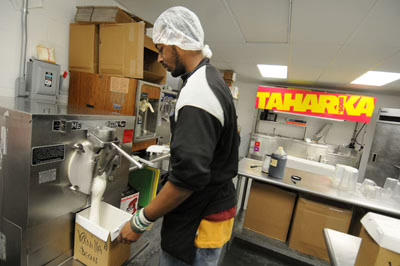
In this Article by Jane Godiner, she talks about how the presence of a loan can help keep a small business going. Or ED, Christa, talks about the structure of BRED’s loans and what makes them unique. Read more through the link below.
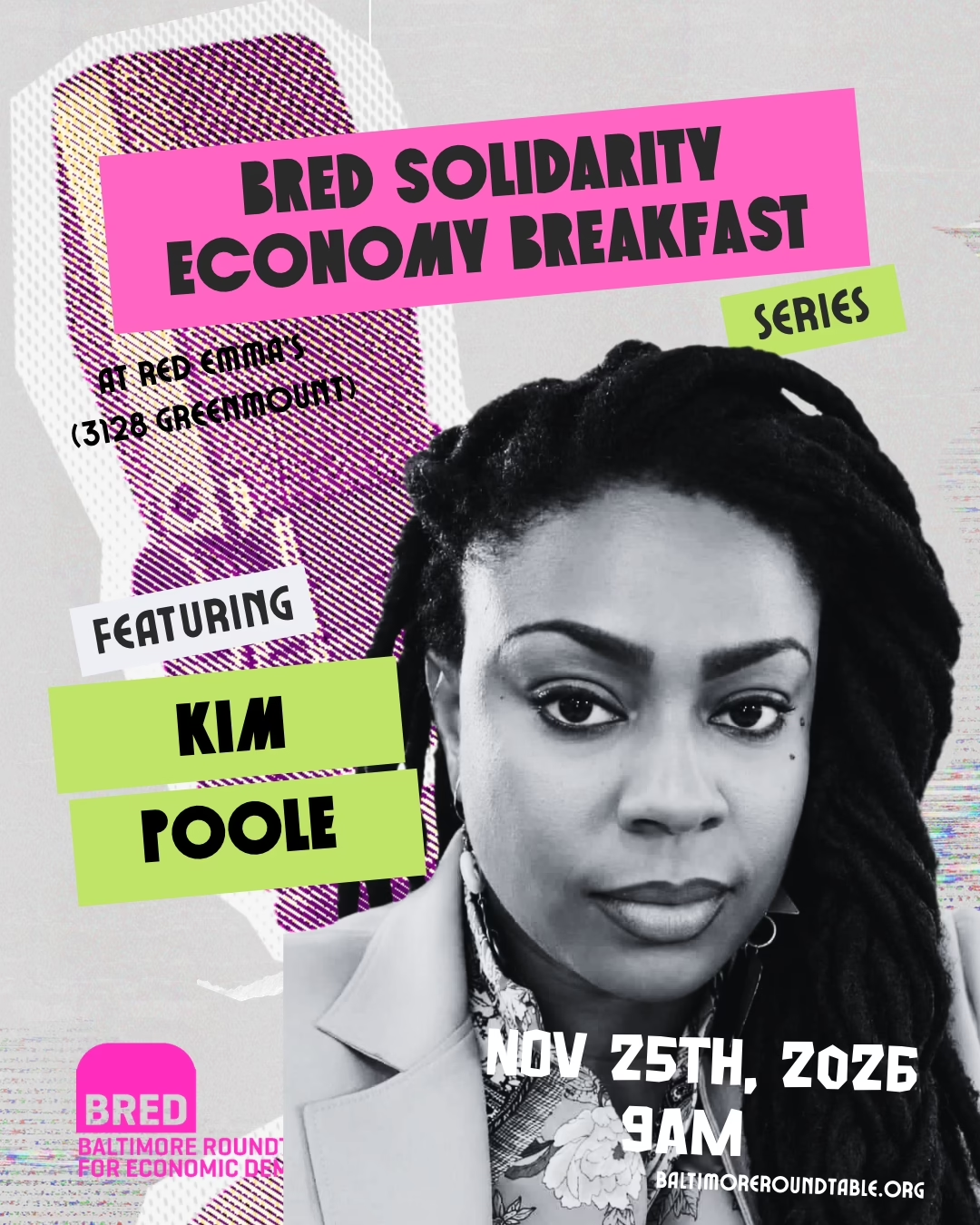
It’s almost time for another Solidarity Economy Breakfast and this month we have Kim Poole! You don’t want to miss this one!
Kim Poole is a Soul-Fusion performing artivist, cultural strategist, and Executive Director of Teaching Artist Institute (TAI), an international cultural cooperative working across nine countries. Her practice uses art as a methodology for social and conflict transformation, cultural reparations, and community regeneration. For more than a decade, Poole has developed Cooperative Repair, a practice that applies shared ownership, collective restoration, and cultural memory to communities navigating historical harm and social division. Through TAI, she designs participatory research, glocal dialogues, arts co-production, cultural exchange, and training platforms across Global African and diasporic communities seeking accountable pathways toward lasting transformation. Poole has convened cultural diplomacy and peacebuilding dialogues connected to the United Nations, African Union, the Vatican, and universities exploring reparative futures. Her work demonstrates how artistic practice, cultural memory, and cooperative leadership can become practical infrastructure for healing, reconciliation, and the art of possibility in public life and institutional repair efforts.
As always, there will be a free light breakfast available, along with tea and coffee. More items are available for purchase from Red Emma’s, and please check out the bookstore after the session.
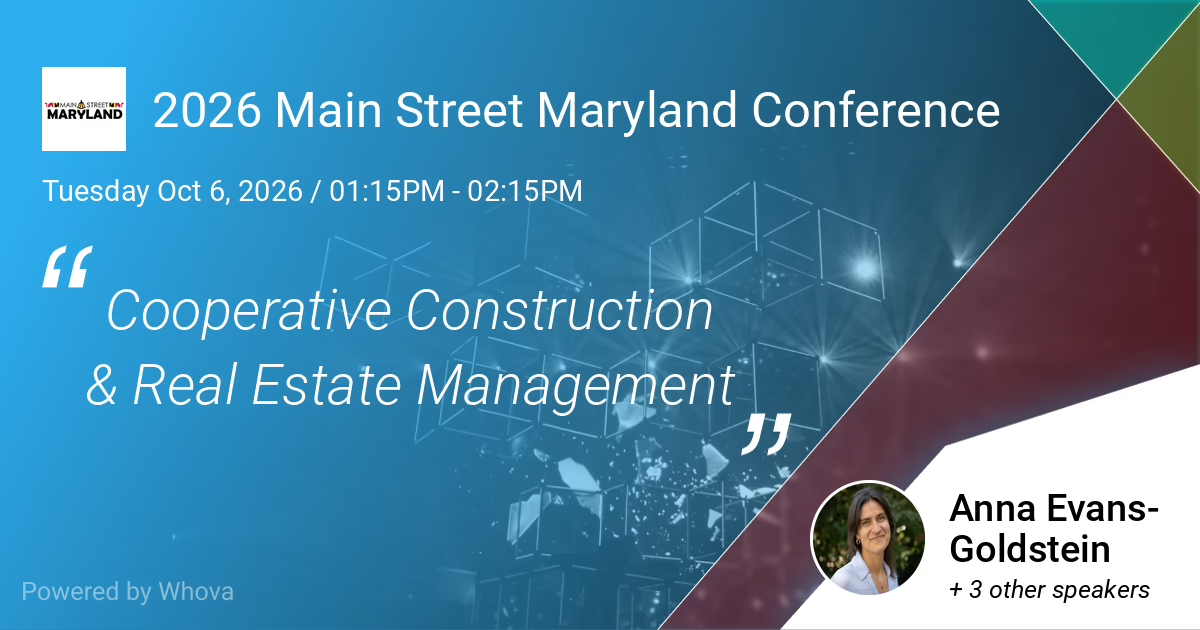
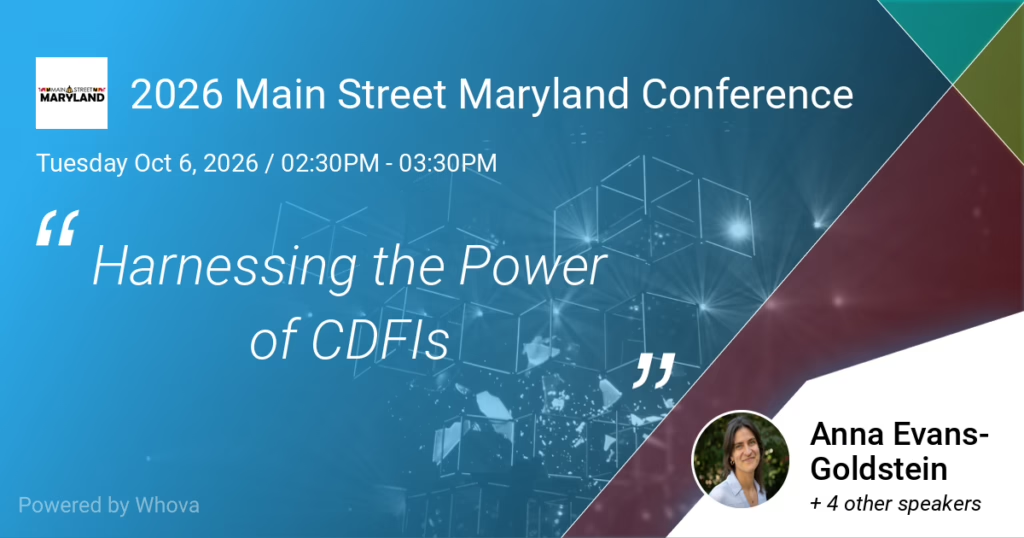
On October 6, 2026 an annual conference returns to Maryland. Maryland’s many Main Streets are the heart of our vibrant and welcoming communities. The 2026 Main Street Maryland Conference, organized by the Maryland Department of Housing and Community Development (DHCD) and the Maryland Economic Development Association (MEDA), will bring together community leaders, economic development professionals, small business advocates, and local partners for two days of learning, collaboration, and inspiration focused on strengthening Maryland’s downtowns.
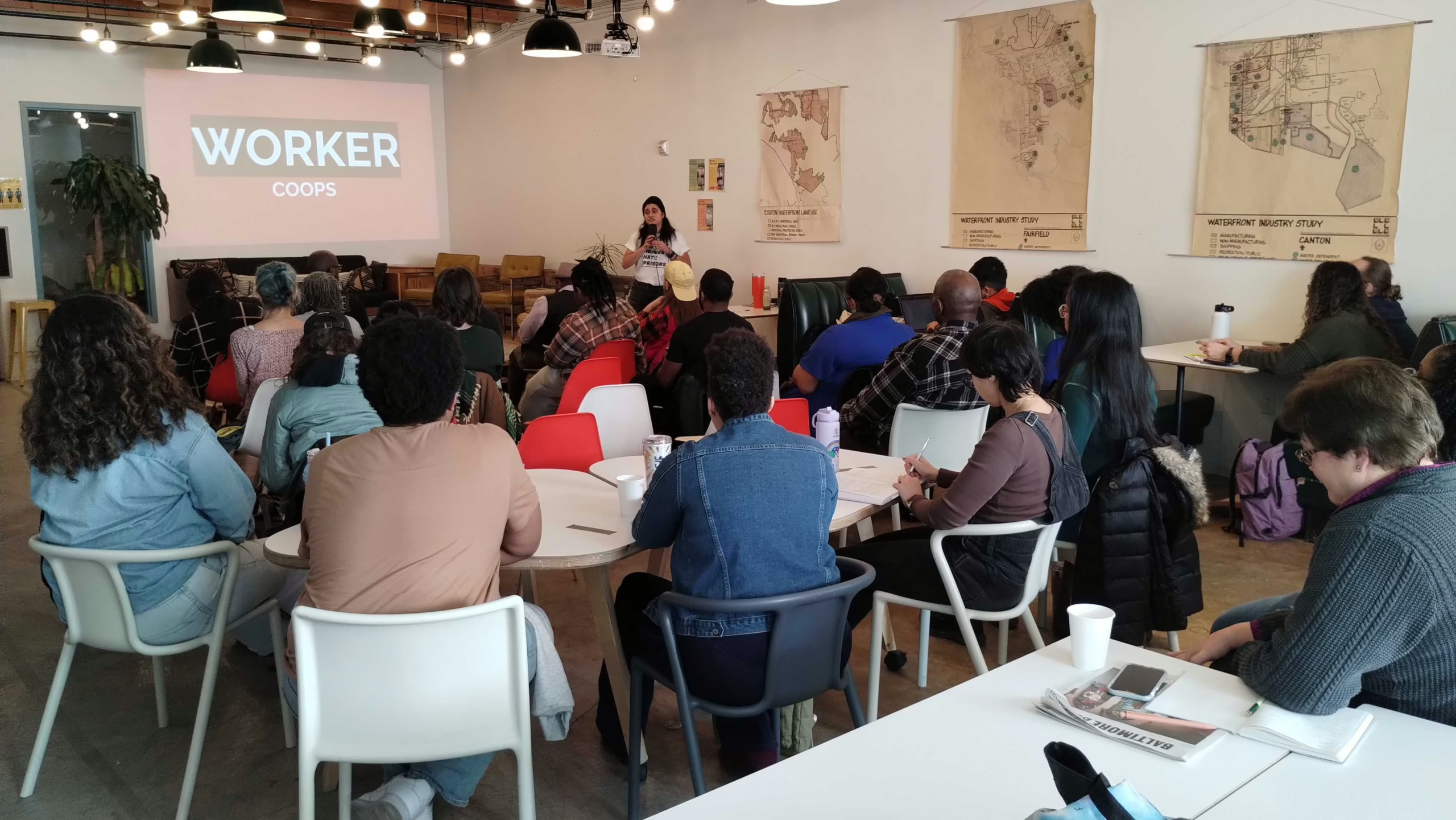
Join the Baltimore Roundtable for Economic Democracy for a breakfast series exploring the amazing solidarity economy enterprises that are black-led, black-centered and putting people, ecology and justice before private profit.
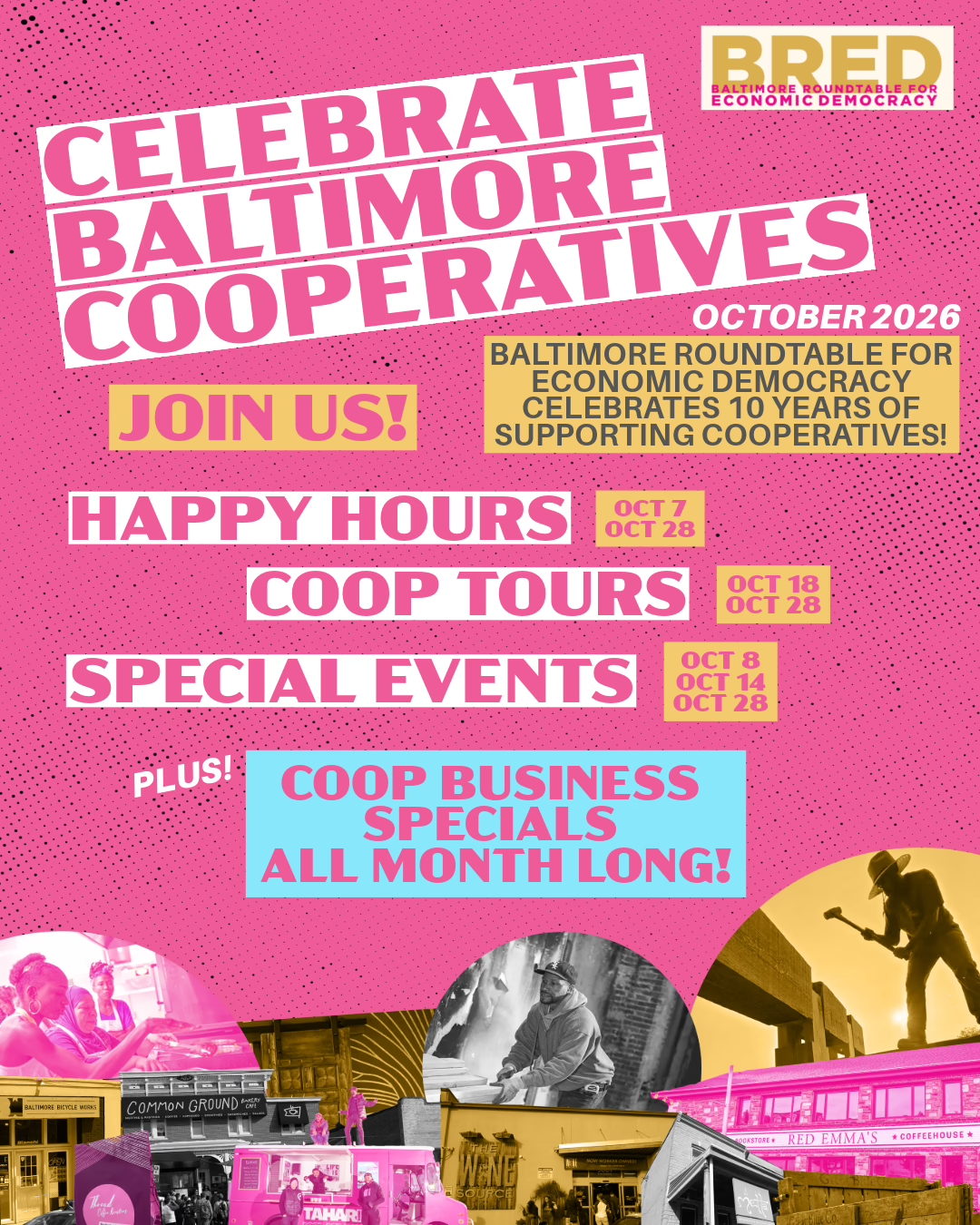
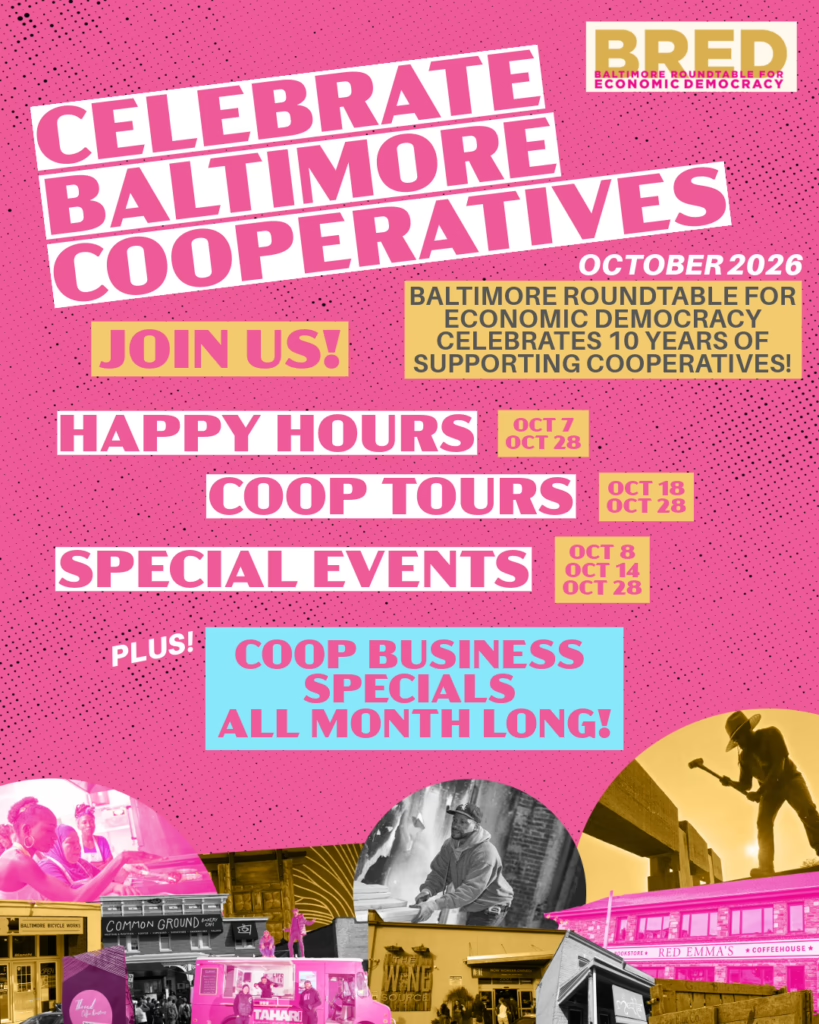
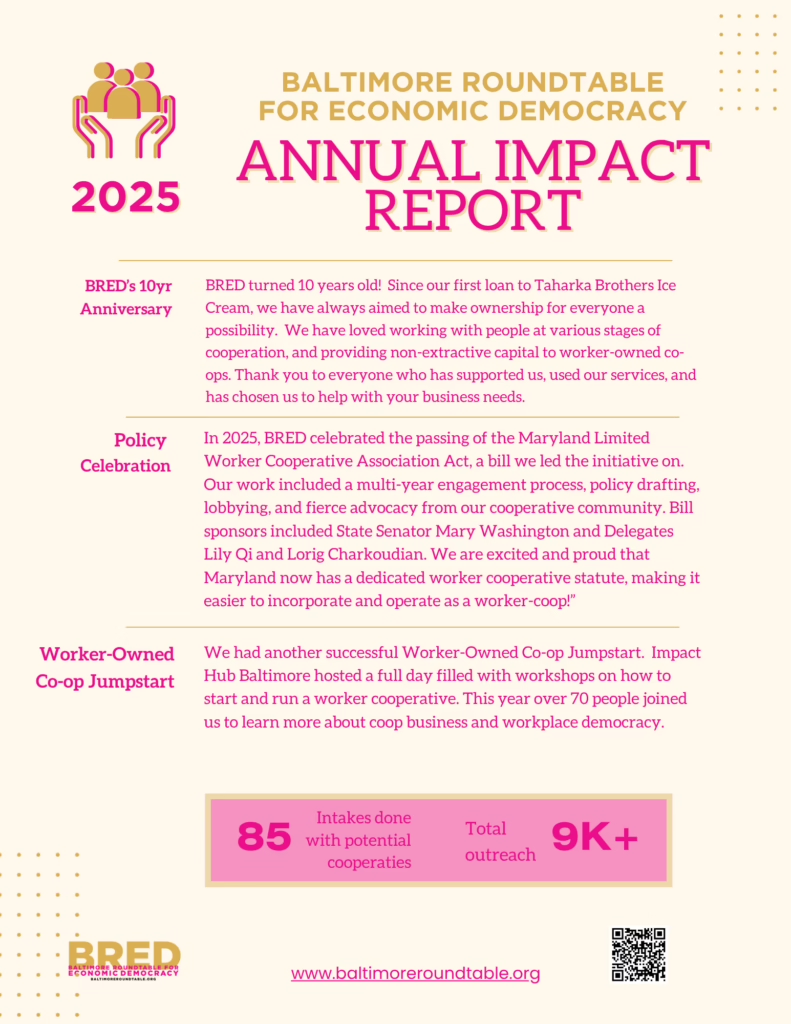
Celebrate with us throughout October during National Cooperative Month. The Baltimore Roundtable for Economic Democracy will be celebrating 10 years of transformative work in the community. We will have events, co-op tours, and co-op specials all month long, so we hope you will be able to join us!!!
A while ago, Sarah Maria reached out to BRED and a few Baltimore cooperatives, asking if they could interview us for a film about cooperatives. The resulting documentary is available now on YouTube, and it is fantastic. Thank you to Sarah for shooting a film about worker cooperatives and the benefits to the workers and to the communities that surround these businesses.
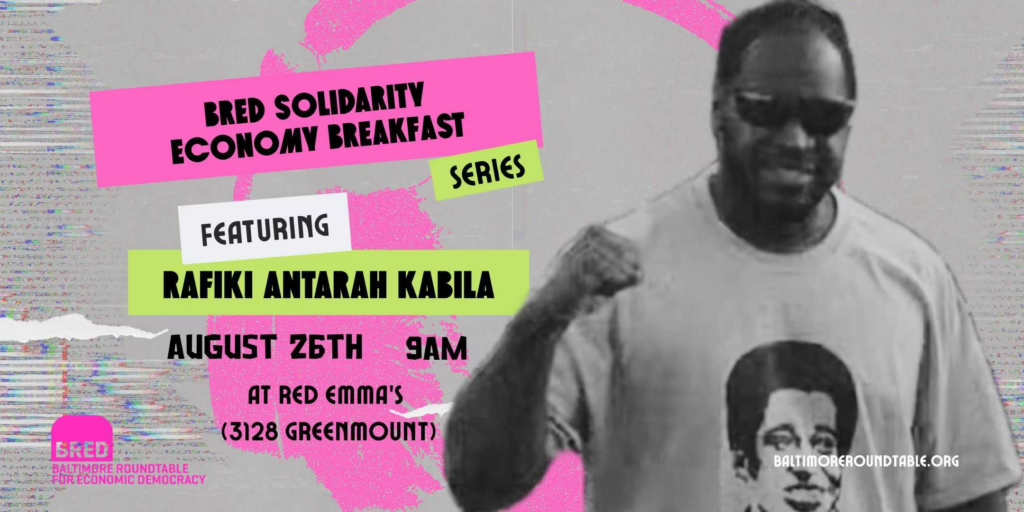
Join the Baltimore Roundtable for Economic Democracy for a breakfast series exploring the amazing solidarity economy enterprises that are black-led, Black-centered, and putting people, ecology, and justice before private profit. Please register for free HERE
Our featured speaker for August is Rafiki Antarah Kabila. Rafiki is a community organizer and educator with the Black August Organizing Committee (BAOC) and George Jackson University (GJU). GJU is a prison-based liberation education initiative working to transform the U.S. Prison-Industrial Complex into the largest educational institution for New Afrikan people, offering Afro-centric studies, political education, and correspondence courses to incarcerated citizens to replace criminal mentality with collective consciousness.
Through the BAOC, Kabila advances political and cultural education across New Afrikan communities, strengthening the culture of resistance and nation-building. His work intersects with key community development initiatives including the Autonomous Infrastructure Mission (AIM) encompassing sustainable agriculture communes (SAC), youth action programs, cooperative economics, math and science centers, community safe-zones, and emergency response networks.
Grounded in collective work and responsibility, Kabila believes New Afrikan people must organize to meet their own basic needs. As he affirms: No one will rescue us from our national oppression but us.
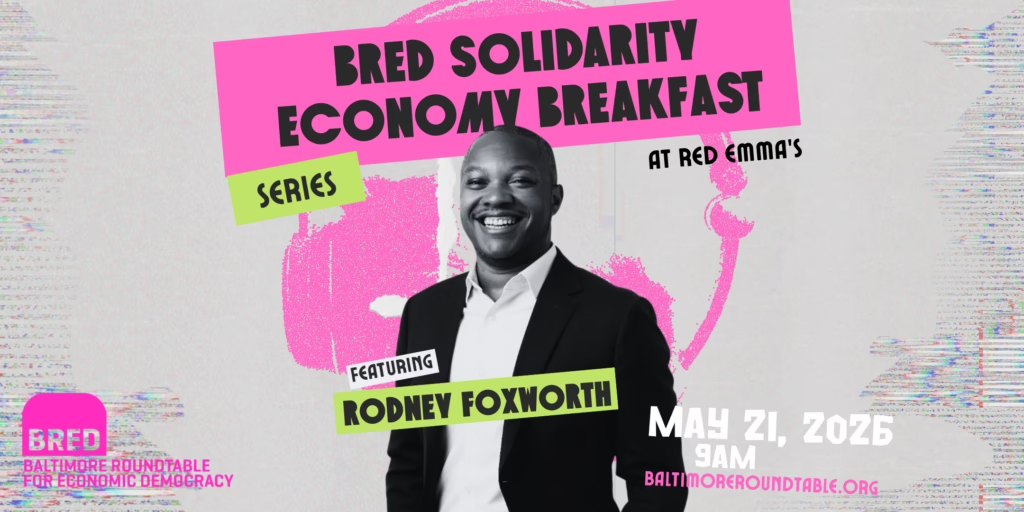
Solidarity economy, but make it breakfast! Announcing a new morning solidarity economy series – with free breakfast – hosted by us! Come out on Thursday, May 21 at 9AM for a coffee and bagels and a conversation about what solidarity economy looks like in practice, with a focused look at black-led, black-centered, solidarity economy enterprises in Baltimore and beyond! Featuring Rodney Foxworth, social entrepreneur, executive advisor, and impact investor at the intersection of business strategy, community development finance, economic inclusion, and philanthropic innovation. Come and check it out! Registration via Eventbrite See you there!